
Overview
Fundamental concepts of the Elements geospatial analysis platform
Core Concepts
Elements is a geospatial analysis platform that enables you to answer questions about what is happening on and to the earth using satellite imagery, SAR, aerial imagery, device location data, and other sensors.
Every analysis in Elements is built around three fundamental questions - what, where and when:
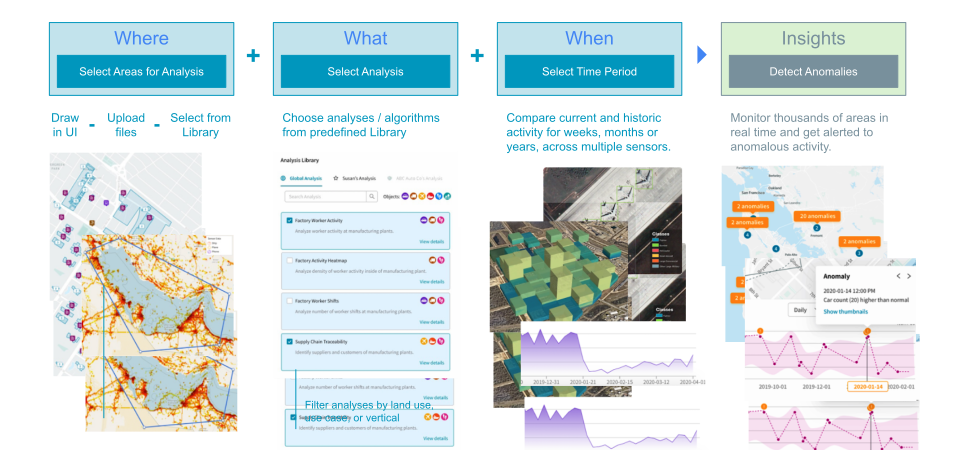
What?
The question you're asking, answered using Algorithms and Analyses. Examples include:
- Object detection (cars, ships, planes, buildings)
- Foot traffic and device visits
- Land use classification
- Supply chain tracing
- Change detection
- And much more...
Algorithms and analyses process many different data sources.
Where?
Specified using Areas of Interest (AOIs) - polygons drawn on a map that define the geographic regions you want to analyze. Examples include:
- A store location
- A city or region
- Multiple locations for comparative analysis
- Custom polygons for specific study areas
When?
Determined through Times of Interest (TOIs) - time ranges or temporal cadences that define when your analysis should run. Examples include:
- Last 30 days of data
- Daily snapshots over a year
- Hourly monitoring during business hours
- Weekly aggregations for trend analysis
Bringing It Together
Computations combine these three elements:
Algorithm + AOI Collection + TOI = ComputationComputations can then be combined into Analyses.
Updated 9 months ago